

Affordable Alternatives to Anthropologie Home Decor
Table of Contents
- Why Anthropologie's Look Costs So Much (And What to Do Instead)
- Quick Comparison: Affordable Anthropologie Home Decor Alternatives
- Boho Home Decor on a Budget: Textiles, Lighting, and Statement Pieces
- How to Style a Room Like Anthropologie Without the Price Tag
- Best Places for Unique Home Accessories: Curated Boutiques and Marketplaces
- Sustainable and Ethical Decor Sourcing: Quality Over Mass-Market
- Resale, Return Policies, and Shipping: What to Check Before You Buy
- Conclusion: Building a Collected, Cozy Home for Less
- Frequently Asked Questions
Last Updated: September 23, 2026
Why Anthropologie's Look Costs So Much (And What to Do Instead)
Anthropologie's signature aesthetic, layered textiles, global-inspired patterns, artisan-looking statement pieces, rarely dips below luxury prices. This guide from Peach and Pantry breaks down why, and how to recreate affordable alternatives to Anthropologie home decor without sacrificing warmth.
Quick Comparison: Affordable Anthropologie Home Decor Alternatives
Here's how the best sources for affordable alternatives to Anthropologie home decor compare.
| Source | Starting Price | Best For | Watch Out For |
|---|---|---|---|
| Peach and Pantry | Accessible pricing | Curated cozy decor and gifting | Houseplants and accessories ship separately |
| World Market | $5 | Global-inspired furniture and rugs | Inconsistent inventory by location |
| Archive New York | $85 | Sustainable artisan textiles | Higher price point |
| Baba Souk | $30 | Colorful Moroccan-inspired accents | International shipping costs |
| Pillowpia | $40 | Textured throw pillows and blankets | Limited inventory |
| Goodee | $25 | Ethical, design-forward home goods | Premium pricing |
Boho Home Decor on a Budget: Textiles, Lighting, and Statement Pieces
- Textiles: Throw pillows, blankets, and rugs carry the most color and texture per dollar. Pillowpia specializes in small-batch, hand-crafted pillows and blankets with distinctive patterns.
- Lighting: A rattan pendant or woven floor lamp changes the entire mood of a room. World Market stocks globally-inspired lighting fixtures that echo the Anthropologie silhouette at a fraction of the cost.
- Statement pieces: One hand-woven pouf, one oversized wall hanging, one artisan vase. Baba Souk's Moroccan-inspired rugs, poufs, and wall hangings give you authentic global-inspired character.
For boho home decor on a budget, order matters more than total spend: anchor the room, then layer.
How to Style a Room Like Anthropologie Without the Price Tag
Styling, not spending, separates a room that looks like Anthropologie from one that looks like a clearance aisle. The brand's visual team follows repeatable rules you can copy, but they change by room.
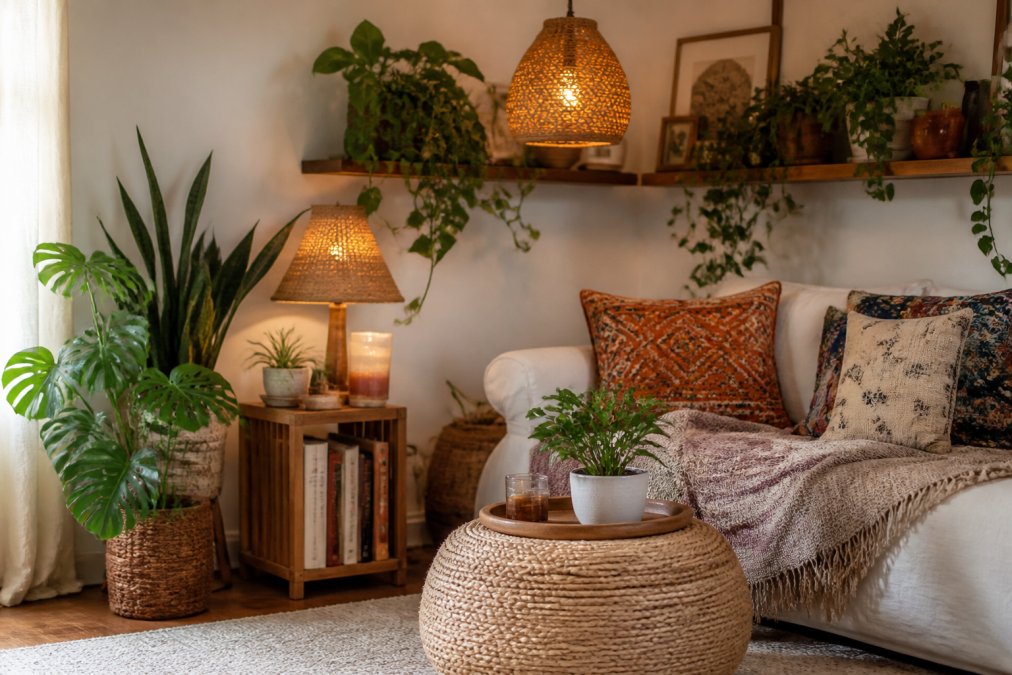
The Five Core Rules (Apply to Every Room)
- Layer three textures minimum. Pair a woven natural fiber with a soft textile and something smooth, like ceramic or glass.
- Mix heights. Cluster a tall vase, a mid-height stack of books, and a low bowl on the same surface.
- Leave one thing imperfect. A slightly askew throw or an unstacked pile of books reads as lived-in, not staged.
- Use warm bulbs. Soft white light flatters every texture in the room; cool white flattens it.
- Group in odd numbers. Three or five objects on a shelf look collected. Two or four look placed.
Living Room: Anchor With the Rug, Then Layer Up
The living room carries the most visual weight, so it deserves the largest share of your budget. Stylists often spend roughly half the room's decor budget on the rug alone, it sets the color palette, and a cheap rug undermines every piece on top of it.
Sequence it this way:
- Rug first. A flatweave, jute, or vintage-inspired rug in a muted palette. Size up: an 8x10 under a standard sofa reads more expensive than a 5x8 floating in the middle.
- Sofa textiles second. Two throw pillows in contrasting textures (one nubby, one smooth) plus a draped throw. This is where Pillowpia's small-batch pillows earn their keep.
- Lighting third. A rattan or woven pendant overhead, plus one table lamp for warm ambient fill. World Market's globally-inspired fixtures echo the Anthropologie silhouette without the markup.
- Statement piece last. One oversized wall hanging, a large ceramic vase, or a hand-woven pouf. Baba Souk's Moroccan-inspired pieces read as collected, not cataloged.
Bedroom: Layer the Bed, Then Soften the Edges
The bedroom is where texture density matters more than statement pieces. The Anthropologie look here comes from layering, not one hero object.
- Start with a neutral duvet or quilt in a natural fiber. Linen and washed cotton both develop the soft, slightly rumpled hand that reads as lived-in.
- Add two to three pillow layers. A euro sham pair in back, standard shams in the middle, one or two accent pillows in front. Mix a solid, a stripe, and a small-scale pattern.
- Drape a throw across the foot of the bed at an angle, not squared off. This single move does more for the styled look than any other bedroom adjustment.
- Warm the edges. A bedside lamp with a fabric shade, a small stack of books, a ceramic tray for jewelry. Skip overhead lighting in the evening.
Dining and Entry: Small Surfaces, High Impact
These rooms reward a little, because the eye lands on small vignettes rather than whole-room compositions.
- Dining: A woven table runner, a low bowl or vase at center, and mismatched-but-coordinating chairs. Mismatched chairs are the most Anthropologie-coded move in a dining room, and often cheaper than a matched set because you can source them one at a time.
- Entry: A console or bench, one large piece of art or a mirror above it, a catch-all tray, and a single tall element (a floor vase with dried stems). Resist filling every inch.
The Rearrangement Test
To style a room like Anthropologie on a tighter budget, the answer is almost always rearrangement, not replacement. Pull every decor object out, pile it on the floor, and rebuild one layer at a time. Most people already own 60 to 70 percent of what the room needs. Shop your own shelves first, then fill the gaps.
Best Places for Unique Home Accessories: Curated Boutiques and Marketplaces
The best places for unique home accessories are small curated boutiques and artisan marketplaces, not big-box stores. Mass-market retailers copy trends slowly and at scale, which is why their accessories feel generic.
Where else to look:
- World Market for global-inspired rugs, tabletop decor, and hand-crafted accents, with frequent sales and a loyalty program.
- Baba Souk for vibrant, fair-trade, Moroccan-inspired pieces you won't see in every catalog.
- Pillowpia for textured, whimsical textiles in small batches.
Sustainable and Ethical Decor Sourcing: Quality Over Mass-Market
Sustainable decor sourcing means knowing who made a piece and what it's made from, not just what it looks like, where most budget shoppers get tripped up.
Quality signals worth checking before you buy:
- Material content listed in full, not just "cotton blend"
- Care instructions that match the fiber (hand-wash linen, spot-clean jute)
- Construction details: reinforced seams, lined pillows, finished edges
- Whether the maker or artisan group is named
Resale, Return Policies, and Shipping: What to Check Before You Buy
Return policies and shipping terms decide whether a good deal stays a good deal, the part most decor guides skip, and where budget shoppers lose the most money. Same with resale: everyone mentions it, almost no one explains how to source from it without getting burned.
The Three Logistics Checks Before Checkout
Before you check out anywhere, confirm three things:
- Return window and condition rules. Many boutiques require original packaging and tags, and some exclude sale items. A 14-day window sounds generous until you realize the rug ships in 10 days.
- Who pays return shipping. On a heavy rug or large textile, return postage can erase the savings. A 9x12 rug can cost more to ship back than the discount you got on it.
- Shipping exclusions. Free shipping offers often carve out specific categories. Peach and Pantry, for example, ships free storewide with houseplants and accessories excluded. Read the exclusion list, not the headline.
Sourcing the Resale Market Without Getting Burned
The resale market deserves a real spot in your rotation. Second-hand marketplaces carry vintage-inspired textiles, stoneware, and lighting at prices no retailer can match, and older pieces have the worn patina new decor tries to imitate. But the mechanics matter.
- Estate sales and local auctions. Best for solid wood furniture, brass lighting, and framed art. You can inspect in person, which eliminates the biggest resale risk. Bring a tape measure and a vehicle that fits the piece.
- Online vintage marketplaces. Best for textiles, ceramics, and small decor. You're buying on photos, so ask for additional angles in natural light before committing.
- Local consignment shops. Best for mid-tier furniture and lamps. Prices are higher than estate sales but pieces are usually cleaned and tested.
- Online general resale platforms. Best for volume and price, worst for condition certainty. Filter by seller ratings and read the negative reviews, not the positive ones.
The five-point inspection before you commit:
- Ask for measurements in writing. Photos distort scale. A vase that looks 14 inches tall is often 9.
- Request close-ups of wear points. Stains on textiles, chips on ceramic rims, scratches on wood, fraying on lamp cords.
- Confirm the material, not the description. "Wood" can mean solid oak or particle board with a veneer. Ask for a photo of the underside or back.
- Check for missing hardware. Lamp sockets, drawer pulls, and hanging brackets are the most common omissions, and replacements are rarely exact matches.
- Ask why it's being sold. A vague answer is a yellow flag. A specific one (downsizing, redecorating, duplicate gift) is a green one.
The cost math most buyers skip:
Matching the Channel to the Piece
Not every category belongs in resale. Textiles, ceramics, brass, and solid wood are strongest because they age well and hold value. Upholstered furniture, mattresses, and anything with a strong odor are weakest, cleaning and restoration usually exceed the savings. Buy those new and put your resale budget where vintage wins.
Conclusion: Building a Collected, Cozy Home for Less
The real challenge isn't finding cheap decor. It's building a room that looks collected rather than assembled from whatever was on sale.
Frequently Asked Questions
What are some good dupes for Anthropologie decor?
Good dupes focus on matching the aesthetic, not copying exact items. Look for artisan-made textiles, hand-loomed rugs, and textured throw pillows from brands like Pillowpia or Archive New York. World Market carries global-inspired furniture and accents starting around $5. Baba Souk offers Moroccan-style poufs and wall hangings. The key is prioritizing natural materials and handcrafted details that give Anthropologie home decor its distinctive, collected feel.
Where can I find boho home decor on a budget?
Start with World Market for globally-inspired rugs, tabletop pieces, and lighting. Goodee offers sustainable home goods starting around $25. For textiles specifically, Pillowpia's hand-crafted pillows start around $40, and Baba Souk's artisan accents begin near $30. Thrift stores, estate sales, and online resale marketplaces also yield vintage-inspired finds at a fraction of retail. Mixing one or two statement pieces with budget basics creates a curated look without overspending.
What is Anthropologie home style called?
Anthropologie's home aesthetic is often described as bohemian, eclectic, and whimsical with a global-inspired twist. It blends vintage-inspired textiles, artisan-made ceramics, layered patterns, and natural materials like rattan and linen. The look feels elevated yet cozy, mixing old and new pieces. Understanding this style helps you spot affordable alternatives that share the same design language: textured, colorful, and collected rather than matchy-matchy or mass-market.
Are there ethical alternatives to Anthropologie home decor?
Yes. Brands like Archive New York specialize in hand-loomed, ethically sourced textiles with artisan collaborations. Goodee operates a curated marketplace with transparent supply chains and a focus on circular economy principles. Baba Souk emphasizes fair trade practices with Moroccan artisan-made pieces. These options cost more than mass-market dupes but offer durability, unique patterns, and the assurance that makers were fairly compensated. They align well with a sustainable decor sourcing approach.
How do I style a room like Anthropologie without spending a fortune?
Layer textures first: mix a woven rug, linen curtains, and a chunky knit throw. Add one statement furniture piece, like a rattan chair or vintage-inspired side table. Use warm lighting from a pendant or table lamp with a fabric shade. Group collected objects like ceramics, books, and plants on open shelves. Shop small boutiques and resale sites for unique home accents. The goal is a cozy, lived-in room transformation that feels personal, not purchased all at once.