

How to Identify High Quality Fabric: A 2026 Guide
Table of Contents
- How to Identify High Quality Fabric: Start With the Basics
- Step 1: Run Your Hand Over the Fabric, The Touch Test
- Step 2: How to Check Fabric Quality When Buying Clothes, Visual Inspection
- Step 3: Hold It Up to Light, The Opacity and Density Test
- Step 4: Understand Fiber Content and Fabric Weight
- Step 5: How to Judge Fabric Quality Online, Label Reading and Care
- Step 6: Test for Color Quality and Colorfastness
-
Quality Checks by Fabric Type and Intended Use
- Cotton and cotton blends for everyday wear (shirts, casual pants, basics)
- Linen and linen blends for structured, breathable pieces
- Synthetic blends and performance fabrics for activewear and frequent-use items
- Upholstery and home textiles (furniture, curtains, bedding)
- Key takeaway: Use-specific quality signals
- Frequently Asked Questions
Last Updated: October 11, 2026
How to Identify High Quality Fabric: Start With the Basics
Fabric quality determines whether clothes and home goods last years or fall apart after a few washes. We help customers understand how to identify high quality fabric so they can make confident purchasing decisions. You don't need special training or expensive tools, a few simple tests reveal what you need to know.
Poor fabric quality costs you money: it pills, stretches, fades, and tears. High-quality fabric holds its color, maintains its shape, and feels good against your skin.
Why fabric quality matters for your purchases
High-quality fabric lasts through dozens of washes; cheap fabric shows wear after a few uses. Natural fibers like cotton and wool feel softer and breathe better than low-grade synthetics, regulating temperature and moving with your body. Quality pieces save money because you replace them less often.
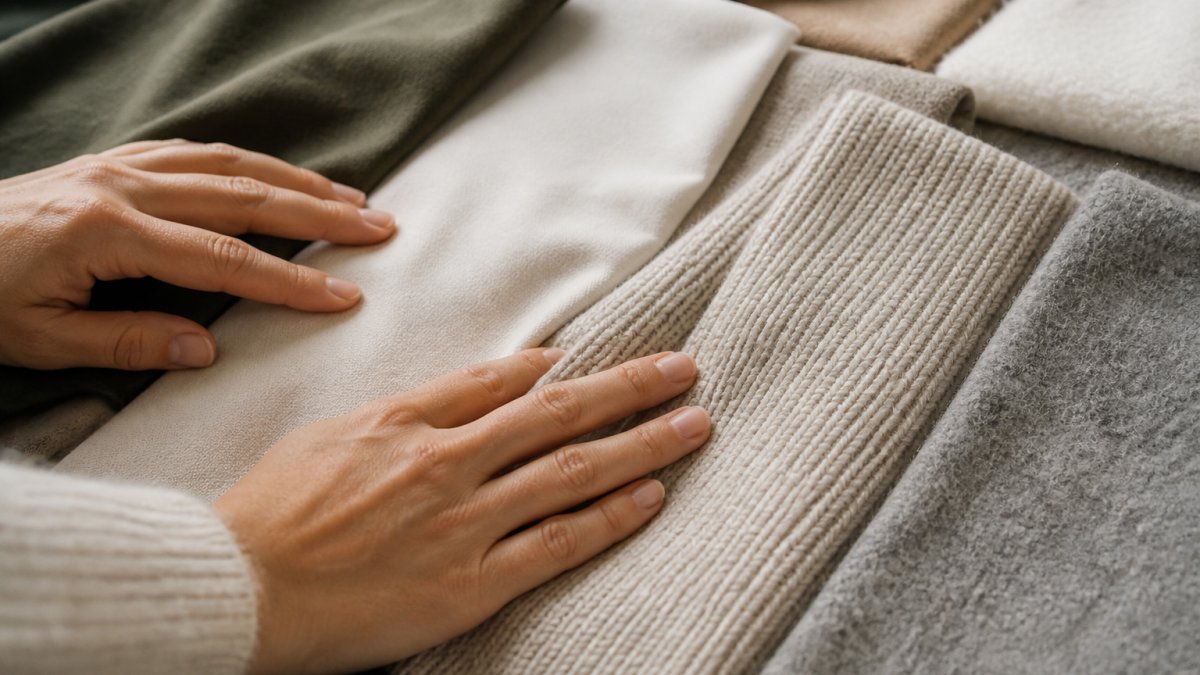
Step 1: Run Your Hand Over the Fabric, The Touch Test
The simplest way to identify high quality fabric is to touch it, your hands feel what your eyes might miss.
What softness and smoothness tell you
High-quality fabric feels soft and smooth throughout. Run your fingers in both directions; rough or scratchy spots signal uneven weaving or low-grade fibers. Softness comes from fiber quality and tight weaving. Natural fibers like cotton and linen typically feel softer than cheap polyester blends.
Detecting stiffness, roughness, and handle quality
Poor-quality fabric feels stiff or papery; pinch a section and feel how it moves. Quality fabric drapes smoothly and returns to shape. Stiffness usually means low fiber count or heavy chemical finishes that will wash out. Roughness, bumps, loose threads, or irregular texture, signals loose weaving or damaged fibers.
Step 2: How to Check Fabric Quality When Buying Clothes, Visual Inspection
Your eyes catch details your hands might miss.
Examining weave and knit construction
For woven fabrics, threads should cross in a tight, regular pattern with no gaps. For knits, loops should be even and consistent without dropped stitches. Loose weaves create fabric that stretches, sags, and pills easily.
Looking for evenness, consistency, and surface defects
Scan the entire surface for thin spots, pilling, pulled threads, color variations, or permanent wrinkles. Even small defects multiply with wear and washing.
Step 3: Hold It Up to Light, The Opacity and Density Test
The light test checks weave tightness but has important limitations.
What the light test reveals and its limitations
Hold fabric to a bright light; quality fabric blocks most light. This test measures thread density but cannot reveal fiber quality, yarn strength, wash performance, dye fastness, or long-term durability. A synthetic blend can pass the light test but still pill.
How to interpret results by fabric type
For lightweight fabrics, some light transmission is normal; look for evenness. For medium-weight fabrics, you should see your hand as a silhouette but not fine detail. For heavy fabrics, almost no light should pass through.
Combining the light test with other checks
Combine the light test with the touch test. A fabric that blocks light but feels stiff may have tight weaving from heavy chemical finishing that will wash out. A soft fabric that allows significant light through may be loosely woven and pill quickly. Use the light test as one data point alongside other inspections.
Step 4: Understand Fiber Content and Fabric Weight
Fiber content matters as much as construction.
Natural versus synthetic fibers
Natural fibers (cotton, linen, wool, silk) breathe and soften with washing; synthetics (polyester, nylon, acrylic) cost less but often feel stiff. A 70% cotton, 30% polyester blend offers durability and easy care. Pure polyester often signals lower quality unless designed for performance.
Why fabric thickness and density matter
Thicker, denser fabrics last longer. Quality garments feel substantial, not flimsy. High thread count means tighter weaving, better durability, and resistance to pilling.
| Fabric Type | Ideal Weight | Expected Durability | Best For |
|---|---|---|---|
| Cotton knit | Medium | 2-3 years | T-shirts, casual wear |
| Cotton woven | Medium-heavy | 3-5 years | Pants, structured pieces |
| Linen blend | Medium | 3-4 years | Summer clothing |
| Performance blend | Medium-heavy | 4+ years | Activewear, frequent use |
Step 5: How to Judge Fabric Quality Online, Label Reading and Care
When you can't touch fabric in person, labels reveal quality.
What to look for on fiber and care labels
The fiber label should list exact percentages; "polyester blend" without specifics signals lower quality. Care labels reveal durability: dry clean only indicates delicate fabric, while machine-washable indicates durability.
Assessing durability and long-term wear potential
Simple care instructions (machine wash, tumble dry) signal durability; complicated instructions suggest delicate fibers.
Step 6: Test for Color Quality and Colorfastness
Color quality matters for both appearance and durability. Poor dyes fade quickly or bleed onto other clothes.
Examine the color closely. Quality fabrics have rich, even color throughout. Faded spots or uneven dye application signal poor colorfastness. Ask yourself: does the color look vibrant or dull? Does it look consistent across the entire piece?
When possible, rub a white cloth against the fabric. If dye transfers easily, the color will fade in the wash. Quality dyes stay locked into the fibers. This test works best before you buy, but some retailers allow it.
Quality Checks by Fabric Type and Intended Use
Fabric quality standards depend on what you're buying and how you'll use it. A quality t-shirt and quality upholstery require different construction, fiber blends, and durability measures. Tailoring your inspection to the intended use helps you spot real problems and avoid false expectations.
Cotton and cotton blends for everyday wear (shirts, casual pants, basics)
Cotton is forgiving but quality varies widely. For everyday garments, look for a balanced blend rather than 100% cotton. Pure cotton softens beautifully but stretches out of shape and wrinkles easily.
A French Terry Knit Graphic Sweatshirt →
For t-shirts and casual tops, feel the weight. Quality t-shirt fabric should feel substantial but not stiff, roughly 5-6 ounces per square yard for standard weight. Hold it to light; you should see a faint silhouette but not fine detail.
For casual pants and shorts, density matters more than softness. The fabric should feel smooth but have a slight structure. Run your hand along the grain; quality woven cotton has a consistent nap (directional texture). Check for color evenness; cheap denim often has uneven dye lots.
Care label guidance: Machine-washable cotton blends are durable. If a cotton garment requires dry cleaning, the dyes or finishes are delicate, which often signals lower quality or special care costs over time.
Linen and linen blends for structured, breathable pieces
Linen is naturally durable and becomes softer with washing, but pure linen wrinkles heavily and can feel stiff when new. Quality linen pieces are usually blended with cotton or synthetic fibers.
For summer clothing and structured pieces, look for a 55-70% linen, 30-45% cotton blend. This balance gives you linen's breathability and durability with cotton's wrinkle resistance. Pure linen should feel smooth and have a slight sheen; dull or papery linen signals poor fiber quality or heavy chemical processing.
Examine the weave closely. Linen should have a tight, even weave with no slubs (thick spots in the yarn) unless they're intentional texture. Hold it to light; quality linen blocks most light evenly.
Care label guidance: Linen that requires dry cleaning is likely a delicate blend or has finishes that won't survive regular washing. Washable linen is more durable and practical for frequent wear.
Synthetic blends and performance fabrics for activewear and frequent-use items
Performance fabrics blend synthetics (polyester, nylon, spandex) for specific functions: moisture-wicking, stretch recovery, durability, or quick-drying. These fabrics feel different from natural fibers, so adjust your expectations.
For activewear and moisture-wicking garments, the fiber blend is critical. Look for labels specifying the blend, for example, 88% polyester, 12% spandex. Vague labels like "polyester blend" without percentages usually indicate lower quality.
Feel the fabric; it should be smooth and have a slight elasticity. Pinch a section and release; it should return to shape immediately. If it feels plastic-like or stiff, the synthetic content is likely low-quality or the fabric has heavy chemical finishes.
Hold it to light; performance fabrics should have tight weaves that block most light. Loose synthetic blends pill badly because the fibers are weak and break easily under friction.
Care label guidance: Most performance fabrics are machine-washable and quick-drying. Avoid high heat; synthetic fibers melt or degrade. Quality performance fabrics maintain their shape and moisture-wicking properties through dozens of washes.
Upholstery and home textiles (furniture, curtains, bedding)
Upholstery requires different durability standards than apparel. Fabrics must resist abrasion from sitting, rubbing, and cleaning. Weight and weave density are critical.
For upholstery fabric, feel the weight; quality upholstery is noticeably heavier than apparel fabric, typically 10-15 ounces per square yard or more.
Examine the backing. Quality upholstery has a woven or nonwoven backing that stabilizes the face fabric and prevents stretching.
Check the label for fiber content and cleaning code. Codes like "W" (water-cleanable) or "S" (solvent-cleanable) indicate the fabric's durability.
For bedding (sheets, pillowcases), thread count matters but is often inflated in marketing. A thread count of 300-600 is realistic for quality cotton sheets.
Feel the fabric; quality sheets feel smooth and soft immediately, not stiff or papery. Hold them to light; they should block most light but not feel heavy or dense.
Care label guidance: Machine-washable, tumble-dry sheets are durable. Sheets requiring special care or low-temperature drying often use delicate fibers or finishes that won't survive regular washing.
Key takeaway: Use-specific quality signals
Before you inspect any fabric, ask: How will this be used? How often will it be washed or cleaned? What matters most, softness, durability, wrinkle resistance, or stretch? Your answers guide which tests matter most. A quality t-shirt prioritizes softness and shape retention. Quality upholstery prioritizes density and abrasion resistance. Quality activewear prioritizes elasticity and moisture management. Matching your inspection to the intended use ensures you're evaluating the right qualities for the job.
Frequently Asked Questions
What are the signs of high-quality fabric?
High-quality fabric feels soft and smooth to the touch, has an even, consistent weave or knit with no visible defects, and maintains its opacity when held to light. The fiber label shows natural or quality synthetic blends, and the fabric has appropriate weight and density for its intended use. Durable fabrics resist pilling and fraying, and color appears uniform without streaking or fading. Check care labels for washability and longevity guidance.
How can you test fabric durability before buying?
Perform a simple stretch test: gently pull the fabric in different directions and observe how quickly it returns to shape. Look for pilling by rubbing a small area gently with your finger. Check seams and hems for tight, even stitching. Read the fiber content and care label to understand expected wear patterns. For garments like the French Terry Knit Graphic Sweatshirt at Peach and Pantry, the 94% cotton blend indicates durability when cared for properly. Online, request detailed product photos showing seams and construction close-ups.
Does higher thread count always mean better fabric?
No. Thread count matters primarily for woven cotton fabrics, but it's not the only indicator of quality. A very high thread count can sometimes make fabric feel stiff or less breathable. Quality also depends on fiber type, yarn quality, weave construction, and finishing. A 200-thread-count cotton with superior fiber quality will outperform 400-thread-count fabric made from lower-grade cotton. Combine thread count information with visual inspection and hand feel to make an informed decision.
How can you identify cloth quality by looking at the label?
Check three key label sections: the fiber content (natural fibers like cotton or wool indicate different qualities than synthetics), the care instructions (quality fabrics usually have simple care needs), and any performance claims (like shrinkage resistance or colorfastness). Look for specific percentages rather than vague descriptions. Avoid fabrics with excessive synthetic content if durability is your goal, unless it's a performance blend. Labels on pieces like Peach and Pantry's Premium Cotton Blend Hoodie clearly list fabric composition, helping you assess expected wear and maintenance.