

Best Boutiques for Inclusive Sizing Apparel
Table of Contents
- What Makes a Boutique Truly Inclusive for Sizing Apparel
- How Size-Inclusive Clothing Brands Compare on Range and Consistency
- How to Find Your Size in Boutique Clothing Before You Order
- What Ethical Plus-Size Clothing Brands Get Right
- Online Boutiques for Women's Clothing: Price Bands and Value
- Everyday Wardrobe Basics in Extended Sizes
- Frequently Asked Questions
Last Updated: October 5, 2026
What Makes a Boutique Truly Inclusive for Sizing Apparel
Inclusive sizing apparel is clothing designed and stocked across a genuinely wide range of body sizes, from standard small through plus and extended sizes, rather than treating larger sizes as an afterthought, and that is exactly what inclusive sizing apparel should mean.
Here's the gap most shoppers run into. A boutique advertises "plus sizes," but the plus section holds three items while the standard section holds thirty. That isn't inclusive sizing. It's a marketing label.
Size ranges and garment measurements that actually matter
A real size range tells you two things: the smallest and largest size carried, and whether that range stays consistent across every category.
Garment measurements matter more than the size label. Bust, waist, hip, and length in inches tell you how a piece will actually fit. When a boutique publishes those numbers on its size chart, you can order with confidence instead of guessing.
Fit, returns, and exchange policies to check first
Return and exchange terms decide whether a sizing gamble is worth taking. Before you order from any boutique, confirm:
- The return window (how many days from delivery)
- Whether returns are free or require you to pay shipping
- Whether exchanges are allowed for a different size
A boutique with a clear exchange policy removes most of the risk of ordering a new size online; a short window and no exchanges puts that risk back on you.
How Size-Inclusive Clothing Brands Compare on Range and Consistency
The strongest size-inclusive clothing brands carry the same style across the full range, publish detailed measurements, and restock the plus range as often as the standard range.
Use this checklist to score any boutique before you buy:
| What to Check | Strong Sign | Warning Sign |
|---|---|---|
| Size range | Same sizes across all categories | Plus sizes only in some items |
| Size chart | Full inch measurements per size | "Fits like a medium" only |
| Restocking | Plus sizes restocked weekly | Plus sizes sell out and stay out |
| Returns | Free exchanges, clear window | Final sale on most items |
| Fit notes | Model height and size listed | No fit guidance at all |
That last row matters more than most shoppers expect: when a product page names the model's height and size, you can translate that to your own body far more accurately than any letter label.
How to Find Your Size in Boutique Clothing Before You Order
Finding your size in boutique clothing means measuring your own body and matching those numbers to the boutique's size chart, not the size you wear at another store.
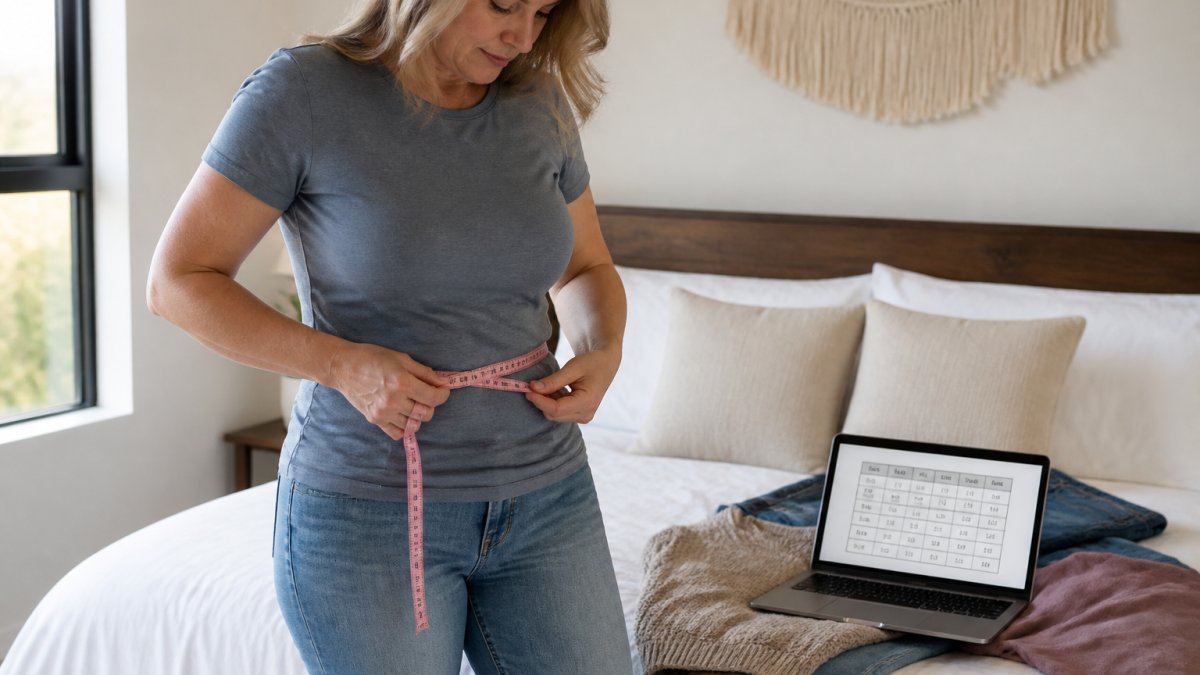
Reading a size chart and measuring yourself at home
Measure over lightweight clothing or bare skin, keep the tape snug but not tight, and write down three numbers: bust at the fullest point, waist at the narrowest point, and hips at the widest point.
Then compare to the chart. A fitted bodycon cut, like our Plus Size Fitted Off-the-Shoulder Front Zipper Bodycon Mini Dress, runs in 1XL through 3XL with a nylon, rayon, and spandex blend that moves with you, forgiving a half-size difference far better than a stiff woven fabric.

What Ethical Plus-Size Clothing Brands Get Right
Ethical plus-size clothing brands treat extended sizes as a core part of the line, not a bolt-on. That shows up in three places: the same designs across the full range, transparency about how and where pieces are made, and pricing that doesn't add a surcharge for larger sizes.
The "plus-size tax," where a larger size of the same garment costs more, is one of the clearest signals of how a brand views its customers.
How to verify ethical claims without a marketing degree
Most boutiques can't afford third-party certification, so "ethical" often comes down to what a brand discloses. Look for these signals in order of reliability:
- Fiber content listed per garment, not per collection. A page that names the exact blend (for example, cotton, rayon, and spandex with percentages) is more transparent than one that says "premium fabric."
- Care instructions on the product page. Wash-and-wear guidance signals the brand expects the piece to last, not to be replaced.
- Named manufacturing region. "Made in" with a country or region is a baseline. Vague phrasing like "imported" tells you nothing.
The slow-fashion connection
Responsible production and slow fashion tend to travel with inclusive sizing, because both come from the same decision: building a line for real bodies over the long term rather than chasing a narrow trend.
The trade-off is real: smaller production runs and broader size ranges cost more per unit. What you're paying for is a size chart graded for your measurements instead of scaled up from a size-small block.
What to ask before you trust an ethical claim
A short email or chat to customer service can settle most of this in one reply. Ask three things: which sizes the style is graded through, whether the price changes by size, and where the garment is made. A boutique that answers all three clearly is doing the work; one that deflects is telling you the "ethical" label is decoration.
Plus Size Fitted Off-the-shoulder Front Zipper Bodycon Mini Dress →
Online Boutiques for Women's Clothing: Price Bands and Value
Online boutiques for women's clothing generally fall into three price bands, and the band tells you what you're paying for. Budget pieces trade fabric weight and finishing for a lower price. Mid-range boutiques balance fabric quality with accessible pricing.
Most shoppers assume the higher band always means better quality, but in inclusive sizing that's not reliably true. What the higher band usually buys is a broader size range and a size chart graded per size, not scaled up from a size-small block.
A practical price-band framework
Use these bands as a starting point when comparing boutiques. Exact numbers vary by category and season, so treat them as ranges rather than rules.
| Band | Typical price per piece | What you're usually getting | What to watch for |
|---|---|---|---|
| Budget | Under $30 | Lighter fabric, simpler finishing, narrower size range | Extended sizes often limited to a few styles |
| Mid-range | Roughly $30-$75 | Balanced fabric weight and construction, broader size range | Size chart may still be inconsistent across categories |
| Premium | Roughly $75 and up | Heavier fabric, smaller production runs, full-range grading | Higher return-shipping costs if the fit is wrong |
For everyday pieces, the mid band is usually the sweet spot: fabric that holds up to repeated washing without the markup of a designer label. Our Boho Floral Print Long Sleeve Blouse, at $39.50, sits in that band, a soft, lightweight fabric with an easy drape that works for the office and the weekend alike.

Shipping, returns, and the real cost of a wrong size
Value isn't only the sticker price. Factor in shipping and returns. Free shipping storewide changes the math on a single-item order, and a clear return policy means one wrong size doesn't turn into a sunk cost.
Run the numbers on a single mid-range piece before you order:
- Outbound shipping. If it's not free, add it to the piece's price.
- Return shipping. If you pay it, a $45 top with a $9 return label effectively costs $54 when the fit is wrong.
- Restocking fees. Some boutiques charge them even when the return is accepted.
- Exchange vs. refund. An exchange for a different size usually costs less than a return-and-reorder cycle.
A boutique with free shipping and free exchanges can be cheaper overall than a lower-priced competitor that charges for both.
Accessibility and shopping experience factors
A good shopping experience removes friction at every step. Detailed size charts, fit notes on the product page, and easy filtering by size shorten the distance between browsing and a confident order.
If you're shopping a boutique with a physical location, the in-store experience matters too. Fitting rooms that accommodate a range of bodies, staff who pull additional sizes without being asked, and inclusive imagery all signal that extended sizes are part of the plan rather than a section in the back.
How to compare two boutiques in five minutes
Open both size charts side by side and check three things: whether the same numeric size maps to the same bust, waist, and hip measurements across categories; whether the price changes by size; and whether returns are free. A boutique that wins on all three is the better value even if its sticker prices run higher; one that wins on price alone but loses on the other two is usually the more expensive choice once a return is factored in.
Everyday Wardrobe Basics in Extended Sizes
Everyday wardrobe basics in extended sizes should be the easiest part of your closet to shop, and they're often the hardest. The pieces you reach for weekly, plain tops, easy dresses, layering staples, are exactly where extended sizes disappear first.
Build your basics around fit and fabric rather than trend. A relaxed top with a flattering drape layers under a jacket or stands alone. A well-cut dress works for errands and dinner with a change of shoes.
A few basics worth prioritizing in extended sizes:
- A relaxed long-sleeve top with an easy drape for layering
- A fitted dress in a stretch fabric for evenings out
- A denim piece cut for your actual hip and waist measurements
- A soft knit for cool evenings
Frequently Asked Questions
How can you tell whether a boutique is truly size-inclusive?
Check the published size range and whether it lists garment measurements, not just S to XL. A boutique that carries inclusive sizing apparel should show bust, waist, and hip numbers for each size, restock extended sizes regularly, and publish a clear return policy. If the plus range is limited to one or two styles while the rest stops at XL, the sizing is not truly inclusive.
What size ranges should inclusive clothing brands offer?
At minimum, a range that runs from standard sizes through plus, with consistent grading across categories. Look for extended sizes in tops, dresses, denim, and swimwear rather than a single plus-size category. Peach and Pantry, for example, carries sizes from small through plus, and pieces like the Plus Size Fitted Off-the-Shoulder Bodycon Mini Dress come in 1XL, 2XL, and 3XL.
How can you check fit and sizing before ordering from a boutique?
Measure your bust, waist, and hips with a soft tape, then compare those numbers to the boutique's size chart rather than your usual label size. Read customer reviews for notes on whether a piece runs small or large. Peach and Pantry publishes a size chart on the website, and the Boho Floral Print Long Sleeve Blouse page directs shoppers there for accurate sizing guidance before checkout.
What should you look for in a boutique's return policy?
Check the return window, whether exchanges are free, and if sale or plus-size items are excluded. A boutique confident in its fit and sizing apparel will offer hassle-free returns without carving out the extended sizes. Peach and Pantry advertises a flexible return policy and free shipping storewide, excluding houseplants and accessories.
Finding a boutique that carries your size, publishes honest measurements, and stands behind its fit shouldn't feel like a gamble. At Peach and Pantry, we're a women-owned lifestyle boutique built around inclusive sizing from S through plus, weekly new arrivals, and free shipping storewide, all at accessible prices. Browse our curated apparel and home pieces, and build a wardrobe that fits the body you actually have.