

How to Measure Body for Clothing: 2026 Fit Guide
Table of Contents
- What You'll Need Before You Measure Your Body
- How to Measure Chest and Bust the Right Way
- How to Measure Waist for Pants and Skirts
- How to Measure Hips and Seat Accurately
- How to Measure Inseam and Leg Length at Home
- Clothing Size Chart Conversion: Translating Your Numbers
- Why Your Measurements Change: Fabric Ease and Body Fluctuations
- Common Measuring Mistakes to Avoid
- Frequently Asked Questions
Last Updated: September 14, 2026
What You'll Need Before You Measure Your Body
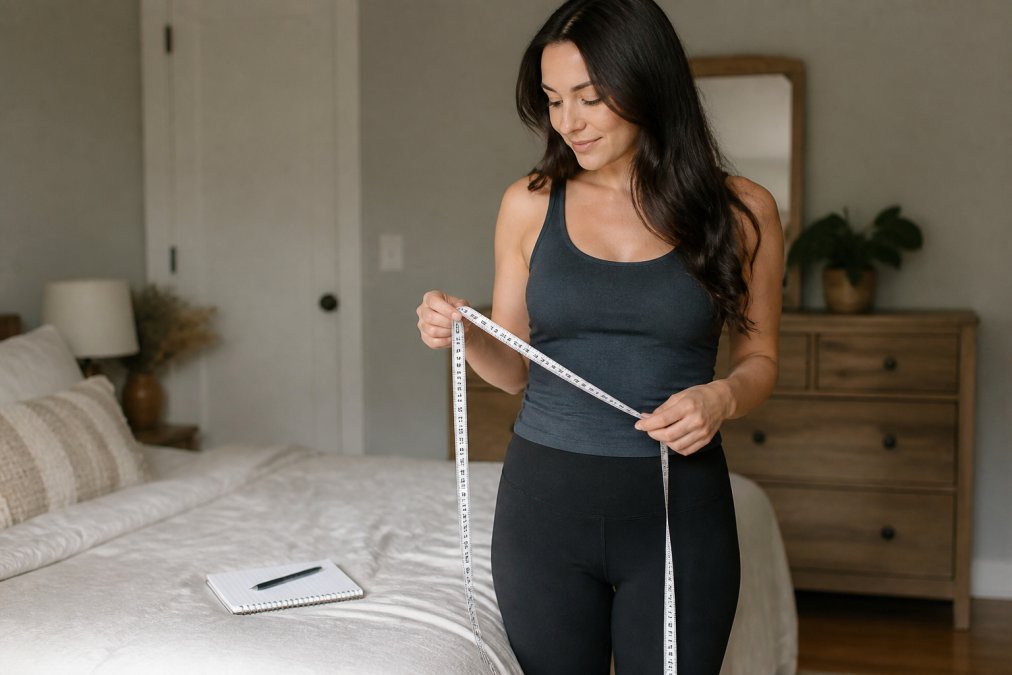
Learning how to measure body for clothing starts with three tools and ten quiet minutes, and the first step is simply to measure body once and trust the number. A flexible tailor's tape is the only non-negotiable item, but a mirror and a notebook turn a rough guess into a number you can actually trust.
Here's your kit:
- Flexible tailor's tape (cloth or fiberglass, not the metal one from the toolbox)
- A full-length mirror so you can check that the tape sits parallel to the floor
- A notebook or phone note to log every number, plus the date
- A fitted t-shirt and leggings, or thin undergarments, not bulky sweats
Wear what you'd wear under the garment you're buying. If you're measuring for a dress, measure over underwear. If you're measuring for a chunky sweater, add room later rather than measuring over layers.
How to Measure Chest and Bust the Right Way
Chest and bust are two different numbers, and most size charts want both. Wrap the tape around the fullest part of your bust, usually at nipple level, keeping it level across your back and shoulder blades. Keep the tape snug but not compressing. For your underbust or chest, measure directly beneath the bust where a bra band would sit.
For anyone buying tops, the bust circumference is the number that decides fit. Write both down, because the difference between them tells you more about how a garment will drape than either number alone.
A common mistake is letting the tape dip at the back. Stand sideways to the mirror and check that the tape stays horizontal all the way around. If you're measuring alone, exhale normally and let your arms rest at your sides before you read the number.
How to Measure Waist for Pants and Skirts
Your natural waistline is not where your jeans sit. It's the narrowest point of your torso, usually just above the belly button, and it's the measurement that matters for how to measure waist for pants. Bend sideways: the crease that forms is your natural waist.
Stand tall, breathe out, and wrap the tape around that crease without pulling it tight. Keep one finger under the tape for breathing room. If you're measuring for low-rise pants, take a second measurement at the height where you actually wear the waistband.
| Measurement | Where to place the tape | What it's used for |
|---|---|---|
| Natural waist | Narrowest point, above the navel | Skirts, dresses, high-waisted pants |
| Low waist | Where your waistband naturally sits | Low-rise and mid-rise jeans |
| Hip | Fullest part of the seat | Pants, fitted skirts |
That explains the front half of the body. The back half decides whether pants actually fit.
How to Measure Hips and Seat Accurately
Your hip measurement is the fullest circumference around your seat, not the top of your hip bones. Stand with feet together and run the tape around the widest part of your buttocks, keeping it parallel to the floor. This number governs how a garment moves when you sit, walk, and climb stairs.
If your hip and waist measurements land in different sizes on a chart, buy for your hips on anything fitted and for your waist on anything with a defined waistband. A tailor can take in a waist. Letting out a hip is far harder.
How to Measure Inseam and Leg Length at Home
Learning how to measure inseam without a second person is easier than it sounds, and it is the measurement people most often get wrong. Stand against a wall in flat shoes with your feet slightly apart. Place a hardcover book between your legs, spine facing up, and slide it up until the spine touches your crotch. Keep the book level, mark the wall at the top of the book, then measure from that mark straight down to the floor. That number is your inseam.
Do not measure an old pair of jeans and call it your inseam. Denim stretches with wear, shrinks in the wash, and varies by brand and rise. The pants you own reflect the pattern that made them, not your leg.
If you want a second check, measure a pair of pants that fit you well at the inseam, from the crotch seam down the inside of the leg to the hem, and compare it to your body number. The two should land within about half an inch. A wider gap usually means the pants were hemmed or the rise sits differently than you assumed.
Measuring Back Length and Torso Length Solo
Back length (sometimes called nape-to-waist) is the measurement most people skip because it is hard to reach. Here is a solo workaround: stand with your back to a wall, tuck your chin slightly, and find the bony bump at the base of your neck, the most prominent vertebra when you tilt your head forward. Hold the end of the tape there with one hand, pin it against the wall with your shoulder blade, and let the tape fall to your natural waist. Read the number where the tape crosses your waistline. Take it twice; the first attempt usually drifts.
Torso length for swimwear and bodysuits runs from the same nape point, down over the fullest part of the bust, through the crotch, and back up to the nape. This is a loop measurement, so it is nearly impossible to take alone without a mirror. Loop the tape, step into it, and adjust in front of a full-length mirror until the tape sits flat against your body without twisting.
Sleeve Length, Shoulder Width, and Neck
For sleeve length, measure from the bony point at the base of your neck, across the top of your shoulder, over a slightly bent elbow, and down to your wrist bone. Keep your arm relaxed, not locked straight. If you are measuring for a garment with a set-in sleeve, also take a shoulder-to-shoulder measurement across the back, from the outer edge of one shoulder bone to the other.
Neck circumference matters for dress shirts and collared tops. Wrap the tape around the base of your neck, just above the collarbone, and add about half an inch of breathing room (Horizontal Solo). A shirt collar that measures exactly your neck size will feel tight by the end of the day.
Clothing Size Chart Conversion: Translating Your Numbers
A clothing size chart conversion only works when you know which chart you're reading. Brands build patterns around their own fit blocks, so a medium at one label can measure like a large at another. Always match your bust, waist, and hip numbers to the chart in inches, then check the garment's stated fit, whether it's relaxed, fitted, or oversized.
Three rules keep conversions sane:
- Match your largest relevant measurement first. Hips decide pants; bust decides tops.
- Read the ease allowance. A "relaxed fit" chart already includes extra room, so don't add your own.
- Compare your numbers to the chart, not to a size letter you wore elsewhere.
Why Your Measurements Change: Fabric Ease and Body Fluctuations
Two things move your numbers over time: the fabric and your body. Most size charts and measurement guides ignore both, which is why so many people measure correctly and still order the wrong size.
Ease Allowance: The Room a Pattern Builds In
Ease is the extra space a garment pattern adds beyond your body measurement so you can move, breathe, and sit.
Fabric changes how much ease a garment needs:
Body Fluctuations: When to Measure and Why It Matters
A few practical rules:
What to Do When Your Numbers Fall Between Sizes
Common Measuring Mistakes to Avoid
Other mistakes worth naming:
Frequently Asked Questions
How do I know my body size for clothes?
Use a soft tape measure to record your bust, natural waist, and hips in inches while wearing lightweight clothing or undergarments. Compare those numbers to each brand's size chart, since sizing varies. For example, a 38-inch bust might be a medium in one store and a small in another. Always check the specific chart for the item you are buying.
What are the three most important body measurements for clothing?
Bust, natural waist, and hips are the three core measurements for most garments. These determine top and bottom sizes. For pants, add inseam and sometimes thigh circumference. For dresses, you may also need torso length. Start with the big three, then add measurements based on what you are shopping for.
Why do clothing sizes vary so much between brands?
There is no universal sizing standard in the United States, so each brand interprets its own fit model. Fabric content also matters: a woven cotton blouse fits differently than a stretch knit. That is why a clothing size chart conversion from one brand rarely matches another. Always measure yourself and compare to the specific brand's chart, not a generic size label.
Should I wear clothes while taking body measurements?
Wear lightweight, form-fitting clothing or undergarments. Bulky sweaters or jeans add inches and skew your numbers. If you must measure over clothes, subtract about half an inch for thin fabric. For the most accurate results, measure against bare skin or a thin base layer, keeping the tape snug but not tight.